

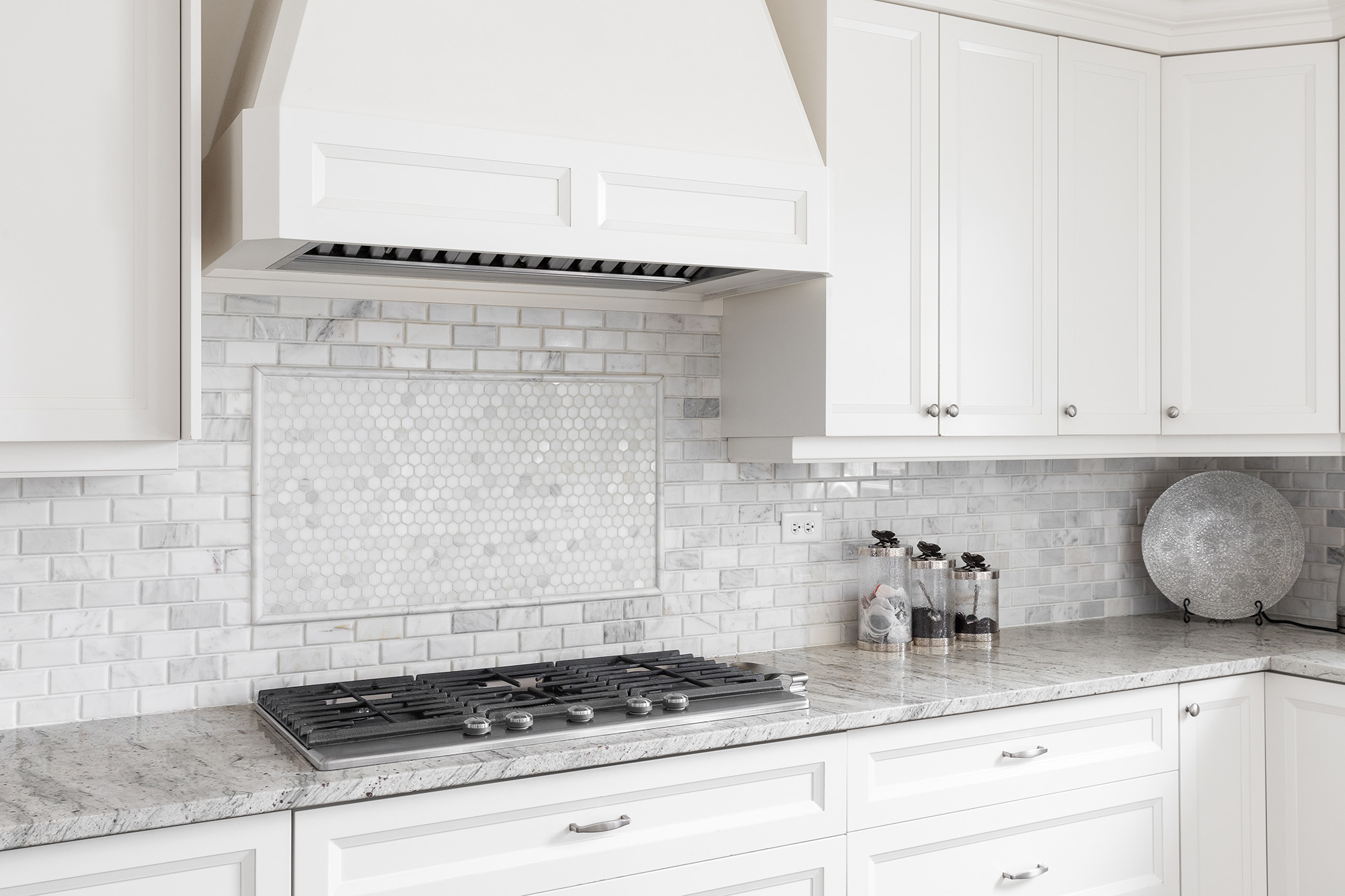
A kitchen backsplash has to do more than fill the wall between your cabinets and countertops. It needs to work with the proportions of the room, complement the rest of the design, and remain practical when cooking leaves behind splashes and spills. Two popular directions are classic subway tile and large-format tile. Both can create a polished backsplash, but they produce very different visual effects and maintenance considerations.
If you are deciding between them, look beyond the trend. The best backsplash for your kitchen depends on the size of the space, the look you want, the number of grout joints you are comfortable maintaining, and how the backsplash connects with the rest of your room.
Subway Tile Brings Texture and Classic Character
Subway tile remains popular because it is remarkably adaptable. The familiar rectangular shape works in traditional kitchens, modern spaces, farmhouse-inspired rooms, and transitional designs. Its biggest visual advantage is the grid created by the individual tiles and grout lines. You can make that pattern more noticeable with contrasting grout or create a quieter look by choosing grout that closely matches the tile.
Changing the orientation can also alter the effect. A traditional horizontal layout feels familiar, while vertical installation can draw the eye upward. More decorative arrangements can create additional visual interest. For homeowners who want a backsplash with some texture and personality, subway tile offers plenty of room for customization without requiring an elaborate pattern.
Large-Format Tile Creates a Cleaner Visual Field
Large-format tile takes the opposite approach. Instead of many smaller pieces covering the wall, larger tiles create broad visual sections with fewer grout joints. That can make a kitchen feel more streamlined, particularly when he tile has a stone-inspired surface or another understated pattern. In a smaller kitchen, the reduced number of grout lines may also help the backsplash feel less visually busy.
Large-format tile can work especially well when you want the backsplash to act as a quiet backdrop for cabinetry, countertops, lighting, or hardware. There is a practical consideration, though. Larger tiles can be heavier and may require more careful handling and installation. Wall flatness also matters because irregularities can be more noticeable with large-format products.
Compare Maintenance Before You Choose
When considering backsplash maintenance, grout deserves as much attention as the tile itself. A subway tile backsplash usually has more grout joints because it contains more individual pieces. That means there are more lines where cooking residue can collect. Keeping grout clean and following the manufacturer's care recommendations can help maintain its appearance.
Large-format tile generally reduces the amount of grout, although it does not eliminate it. The grout joints that remain still need appropriate cleaning, and the tile itself should be maintained according to its material and finish. The easiest backsplash to maintain is not necessarily determined by tile size alone. Porcelain, ceramic, natural stone, textured surfaces, grout color, sealers, and installation quality all play a role.
Think About Your Kitchen's Scale
The size and proportions of your kitchen should influence the decision. In a compact kitchen, a busy subway-tile pattern may compete with cabinets and countertops if too many other visual elements are already present. A simple tile and coordinated grout can keep the room balanced.
Large-format tile can create a calmer appearance, but very large pieces may not always be practical for every wall configuration. Doorways, outlets, corners, windows, and cabinet transitions can create cutting challenges that need to be considered during tile installation. In a larger kitchen, subway tile can add visual rhythm to a broad wall. Large-format tile can instead create a more continuous appearance that lets other design features stand out.
Which Is the Best Backsplash for Kitchens?
There is no universal winner in the subway tile vs. large-format tile backsplash debate. Choose subway tile if you like a more traditional tile pattern, want flexibility with layout and grout, or enjoy a backsplash that contributes noticeable visual texture.
Large-format tile may be the better fit if you prefer a cleaner, more contemporary appearance and want fewer grout lines. Before making your final choice, bring cabinet, countertop, and flooring samples together. Looking at everything as one composition can reveal whether your backsplash should be the feature or the supporting element.
If you are planning a kitchen update, Brough Carpets can help you explore flooring and design options for the surrounding space. Visit the showroom in Lapeer, MI to compare materials in person, and contact us today to begin planning your project. We serve Columbiaville, MI, Davison, MI, North Branch, MI, Imlay City, MI, Attica, MI and nearby Michigan communities.


